
9
Learn to Take History and Examination of a Patient with First Trimester Bleeding
Included in this course
- 6 structured video lessons covering the clinical approach to first-trimester bleeding.
- A systematic approach to history taking, including pregnancy status, gestational age, bleeding, pain, and associated symptoms.
- Focused assessment of risk factors for ectopic pregnancy, miscarriage, and hydatidiform mole.
- Recognition of important red flags and features of haemodynamic instability.
- A step-by-step approach to general, cardiovascular, abdominal, speculum, and bimanual examination.
- Clinical pattern recognition to distinguish ectopic pregnancy, miscarriage, and hydatidiform mole.
- A practical comparison of the different types of miscarriage.
- OSCE-focused history-taking and examination frameworks.
- An integrated clinical case to practise combining history and examination findings.
- End-of-unit quizzes and a final course assessment to reinforce learning.
Description
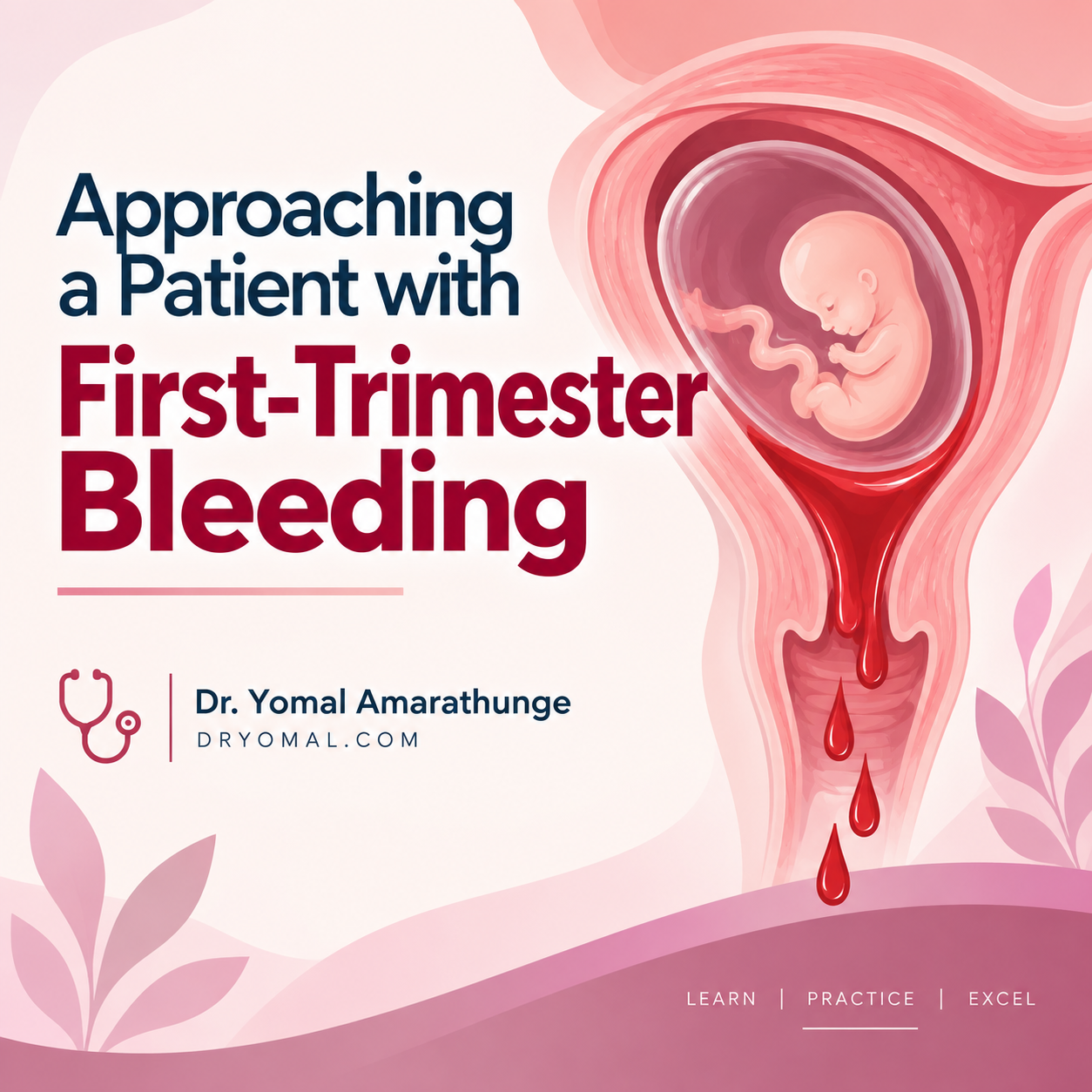
Approaching a Patient with First-Trimester Bleeding is a structured clinical skills course designed to help medical students develop a safe and systematic approach to patients presenting with bleeding in early pregnancy.
First-trimester bleeding is a common clinical presentation with an important differential diagnosis. The priority is not simply to identify the cause of bleeding, but to recognize the patient who may be haemodynamically unstable and requires urgent assessment and management.
This course focuses on the practical skills needed to approach these patients confidently. You will learn how to establish the pregnancy and period of amenorrhoea, characterize the bleeding, assess abdominal pain and associated symptoms, and identify important risk factors.
The course then takes you through a systematic clinical examination, including general assessment, cardiovascular assessment, abdominal examination, speculum examination, and vaginal or bimanual examination when indicated.
Particular emphasis is placed on recognizing clinical patterns that may suggest ectopic pregnancy, miscarriage, or hydatidiform mole, while understanding the limitations of individual clinical findings and the importance of appropriate investigations, particularly ultrasound assessment.
The final units bring these skills together in an OSCE-focused approach, including a structured history model, examination sequence, integrated clinical case, and a one-minute checklist for revision.
By the end of the course, you should be able to approach a patient with first-trimester bleeding in a structured, safe, and clinically focused manner, while clearly presenting your findings and differential diagnosis in an OSCE or clinical setting.
Course Currilcum
-
- Unit 1 – Clinical Approach to First-Trimester Bleeding 00:10:00
- Unit 1 Evaluation Unlimited
-
- Unit 2 – History: Pregnancy, Bleeding & Pain 00:00:00
- Unit 2 Evaulation Unlimited
- Unit 3 – Targeted History & Red Flags 00:00:00
- Unit 3 Evaluation Unlimited
- Unit 5 – From Findings to Diagnosis 00:00:00
- Unit 5 Evaluation Unlimited
- Course End Assessment Unlimited